| |  | |  | |  |
The intervertebral disc lies between the vertebrae in the spine, and acts as a cushion, shock absorber, and allows
movement in the spine. The disc is made up of a soft, gel-like center, (the nucleus pulposus) that is surrounded by a
fibrous ring (the annulus fibrosis).
When the disc undergoes trauma, it can cause the nucleus pulposus to herniate, or protrude through the annulus fibrosis.
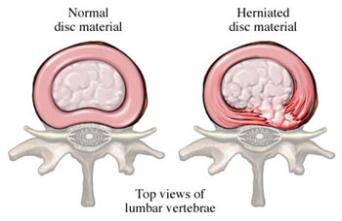
pressure on the adjacent nerve, or it can bulge posteriorly
into the spinal canal, where the spinal cord lies.
- Weakness
- Numbness/tingling
- Altered sensation
- Shooting pain (down the arms or legs)
- Pain
removing pressure on the affected nerves. Over the course of treatment, the disc's outer layer will usually heal and allow
for complete recovery.